
Introduction
In today’s fast-paced world, distractions are everywhere. We are constantly switching between screens, notifications, and endless information, leaving little room for deep concentration or creative thinking.
Fine arts offer a refreshing alternative. Whether it’s drawing, painting, or sketching, the creative process encourages us to slow down, stay present, and engage our minds with intention. Beyond creating beautiful artwork, fine arts nurture essential life skills that contribute to personal growth and well-being.
Art Teaches the Power of Focus
Every painting begins with a single brushstroke.
Choosing colors, refining details, and completing a composition require patience and sustained attention. These seemingly simple actions strengthen our ability to concentrate and remain engaged with a task.
Research in neuroscience suggests that creative activities such as drawing and painting activate areas of the brain associated with:
- Attention
- Problem-solving
- Visual processing
- Decision-making
Studies have also shown that spending just 45 minutes creating art can help reduce stress while improving concentration and mental clarity.
Creativity Is a Skill That Can Be Developed
Many people believe creativity is an inborn talent.
In reality, research in cognitive psychology shows that creativity grows through practice, experimentation, and curiosity.
Fine arts encourage learners to:
- Explore new ideas
- Experiment without fear
- Learn from mistakes
- Discover multiple solutions
- Think beyond conventional patterns
Unlike subjects with fixed answers, art provides the freedom to imagine, adapt, and innovate.
Building Confidence Through Creation
Confidence doesn’t develop overnight—it grows through experience.
Every completed sketch or painting represents a personal achievement. The process of turning an idea into something tangible creates a genuine sense of accomplishment.
As artists continue creating, they begin to:
- Trust their decisions
- Appreciate their progress
- Embrace imperfections
- Express themselves more freely
This gradual shift from seeking perfection to valuing personal expression builds lasting self-confidence.
Fine Arts Support Emotional Well-Being
Art is more than a creative activity—it is also a powerful form of self-expression.
Organizations such as the American Art Therapy Association highlight the benefits of creative expression in supporting emotional well-being and self-esteem.
Regular engagement with art can help:
- Reduce stress
- Improve emotional resilience
- Encourage mindfulness
- Enhance self-awareness
- Promote relaxation
For children and adults alike, creative expression offers a healthy outlet for emotions that are often difficult to communicate through words.
Life Skills Developed Through Fine Arts
The benefits of learning art extend far beyond the canvas.
Fine arts help develop:
- Focus and concentration
- Creative thinking
- Problem-solving skills
- Patience and perseverance
- Emotional resilience
- Self-confidence
- Observation skills
- Decision-making
- Visual communication
- Independent thinking
These skills are valuable in academics, careers, and everyday life.
Why Fine Arts Matter in Today’s World
Modern life often rewards speed, efficiency, and constant productivity.
Fine arts encourage something equally important:
- Slowing down
- Thinking deeply
- Observing carefully
- Creating intentionally
In a world filled with distractions, art teaches us to be fully present and appreciate the creative process rather than rushing toward the outcome.
Art Is About the Journey, Not Just the Result
One of the greatest lessons fine arts offer is that growth happens through the process itself.
Each brushstroke, correction, and experiment contributes to learning. Mistakes become opportunities, and every finished artwork reflects not only creativity but also persistence and personal development.
Ultimately, the value of art lies not just in the finished piece, but in the transformation that occurs while creating it.
Conclusion
Fine arts do much more than teach people how to draw or paint. They cultivate focus in an increasingly distracted world, encourage creativity through exploration, and build confidence through self-expression.
Whether pursued as a hobby, educational activity, or lifelong passion, fine arts help shape individuals who are more attentive, imaginative, resilient, and confident. Sometimes, the greatest masterpiece isn’t the artwork itself—it’s the person who grows through the creative journey.
Why Learn Fine Arts?
| Benefit | How Fine Arts Help |
|---|---|
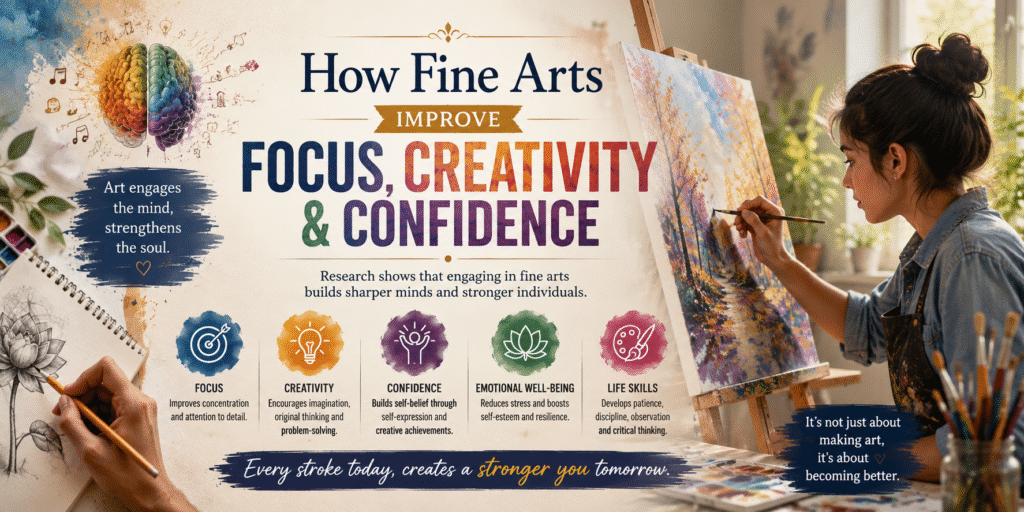
| Focus | Improves attention, concentration, and patience through mindful creative practice. |
| Creativity | Encourages imagination, experimentation, and innovative thinking. |
| Confidence | Builds self-belief through personal expression and artistic achievement. |
| Emotional Well-being | Reduces stress and promotes relaxation through creative engagement. |
| Life Skills | Develops observation, problem-solving, resilience, and independent thinking. |