
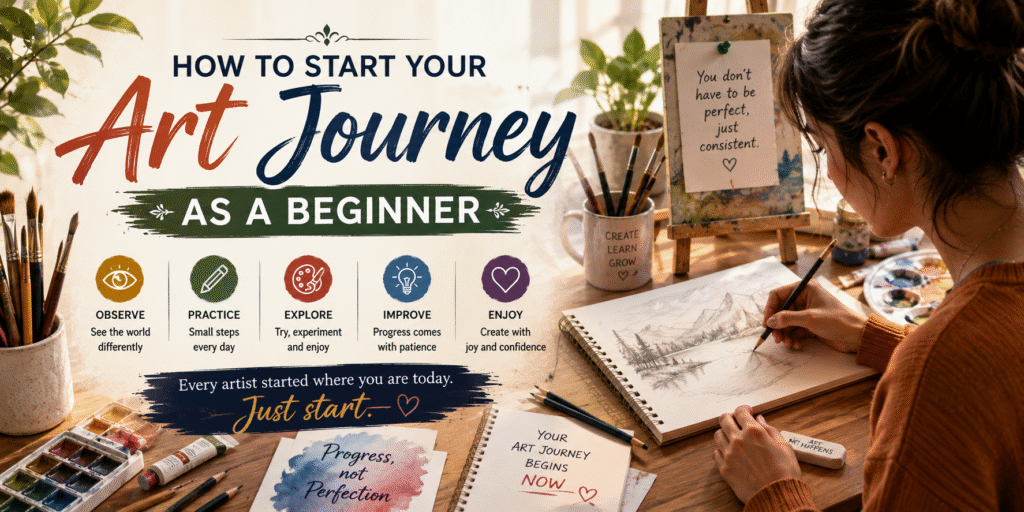
Introduction
Starting your art journey can feel exciting—and a little intimidating. Many people believe they need natural talent before they can begin, but that’s one of the biggest misconceptions about learning art.
The truth is simple: art is a skill developed through practice, observation, and patience. Whether you’re a child exploring creativity for the first time or an adult rediscovering a forgotten passion, every artist begins as a beginner.
This guide will help you take your first steps with confidence.
Why Most Beginners Feel Intimidated
Many aspiring artists hesitate because they believe they need to be “good” before they even begin.
Common fears include:
- “I’m not talented.”
- “My drawings don’t look good.”
- “I’m too old to start.”
- “Others are much better than me.”
These thoughts are completely normal—but they shouldn’t stop you from creating.
Every experienced artist once faced the same uncertainties.
1. Start Before You Feel Ready
The biggest obstacle isn’t a lack of talent—it’s waiting for the “perfect” moment.
You don’t need:
- Expensive materials
- Professional skills
- Perfect drawings
You only need the willingness to begin.
Your first sketches may feel messy, but they’re the foundation of everything you’ll learn later.
Remember: Progress starts with action, not perfection.
2. Learn to Observe Before You Draw
Drawing isn’t just about moving a pencil.
It’s about learning to notice:
- Shapes
- Proportions
- Light and shadow
- Colors
- Textures
- Perspective
Strong observation skills naturally lead to stronger drawings.
The more carefully you see the world, the easier it becomes to recreate it.
3. Keep Your Materials Simple
Many beginners think they need expensive art supplies.
In reality, you can start with:
- Pencil
- Eraser
- Sketchbook or plain paper
- Sharpener
As your skills grow, you can gradually explore paints, brushes, charcoal, or other mediums.
Simple tools help you focus on learning rather than collecting materials.
4. Practice Consistently
Improvement comes from regular practice—not occasional bursts of motivation.
Even 20–30 minutes a day can make a significant difference over time.
Instead of aiming for perfect artwork, aim for consistent progress.
Small improvements eventually become major milestones.
5. Accept Slow Progress
Art is a journey, not a race.
Some days you’ll love your work.
Other days you won’t.
That’s completely normal.
Growth often happens in subtle ways:
- Steadier lines
- Better observation
- Improved proportions
- Greater confidence
- Faster sketching
Trust the process and keep creating.
6. Stop Comparing Yourself to Others
Comparison is one of the biggest barriers to creativity.
Social media often shows finished masterpieces—but rarely the hundreds of practice sketches behind them.
Instead of comparing yourself to others, compare your current work with your previous work.
Your only competition is yesterday’s version of yourself.
7. Create Without Fear of Mistakes
Mistakes are not signs of failure.
They’re valuable learning opportunities.
Children often improve quickly because they create freely without worrying about perfection.
Adults tend to:
- Overthink
- Judge every sketch
- Erase repeatedly
- Fear making mistakes
Let yourself experiment.
Every drawing teaches something new.
8. Learn with the Right Guidance
While self-practice is valuable, structured learning helps you progress more efficiently.
A good art mentor or course can help you:
- Understand drawing fundamentals
- Build proper techniques
- Avoid common beginner mistakes
- Stay motivated
- Develop confidence
Learning alongside others also creates a supportive and encouraging environment.
Essential Skills Every Beginner Should Develop
Focus on building these foundational skills:
- Observation
- Line control
- Shapes and forms
- Perspective
- Light and shadow
- Composition
- Color theory
- Patience
- Creativity
- Consistency
Mastering these basics creates a strong foundation for every art style.
Beginner Tips for a Successful Art Journey
✔ Draw regularly—even if it’s just for a few minutes.
✔ Carry a sketchbook wherever you go.
✔ Observe everyday objects carefully.
✔ Celebrate small improvements.
✔ Don’t erase every mistake.
✔ Try different subjects before choosing a favorite style.
✔ Keep learning and stay curious.
Every Artist Was Once a Beginner
No artist starts with perfect skills.
Every admired painter, illustrator, and designer once struggled with uncertain lines, awkward proportions, and self-doubt.
The difference is simple:
They kept practicing.
If you’re thinking about starting today, you’ve already taken the most important step.
Conclusion
Beginning your art journey isn’t about having exceptional talent—it’s about being willing to learn.
With patience, regular practice, thoughtful observation, and the right guidance, anyone can develop artistic skills over time.
Your first drawing won’t be your best—and it doesn’t need to be. Every sketch, every mistake, and every improvement is part of the creative journey.
The hardest part is starting. Once you do, you’ll discover that every great artist began exactly where you are now—with curiosity, determination, and a blank page.
Beginner’s Roadmap
| Stage | What to Focus On |
|---|---|
| Step 1 | Start with simple sketches using basic materials. |
| Step 2 | Practice observation and learn to see shapes, light, and proportions. |
| Step 3 | Build a consistent daily or weekly drawing habit. |
| Step 4 | Learn core fundamentals like perspective, shading, and composition. |
| Step 5 | Experiment with different styles and mediums as your confidence grows. |
| Step 6 | Seek guidance through classes, workshops, or experienced mentors to refine your skills. |