
Introduction
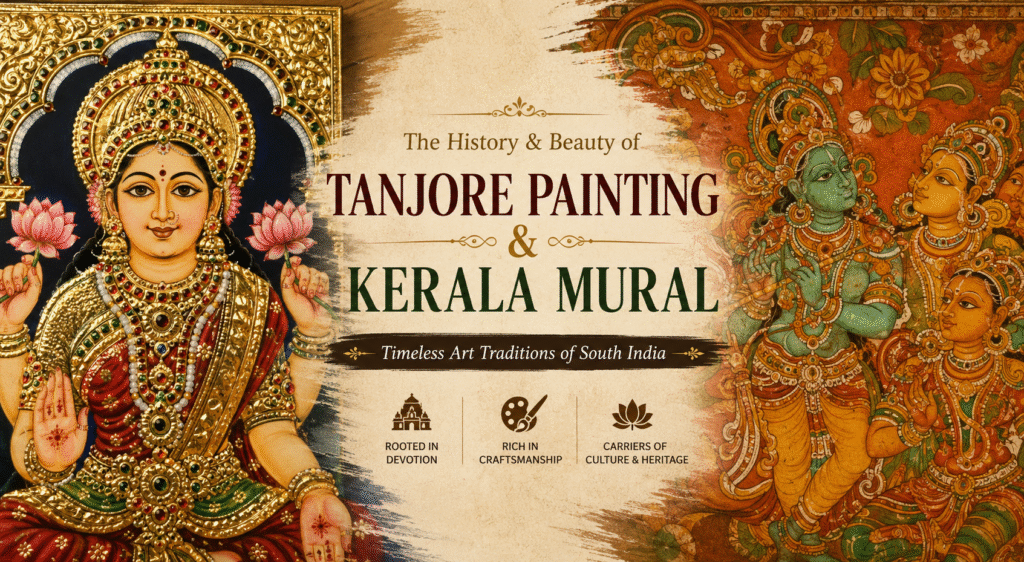
In South India, art has always been more than decoration. It serves as a medium of devotion, storytelling, and cultural identity. Among the region’s most celebrated artistic traditions, Tanjore painting and Kerala mural painting stand out for their unique styles, craftsmanship, and spiritual significance.
Although both traditions are deeply rooted in faith, they express the divine in remarkably different ways. One celebrates radiant icons of worship, while the other unfolds epic stories across architectural spaces.
The Origins of Tanjore Painting
The tradition of Tanjore painting originated in the temple town of Thanjavur, Tamil Nadu, during the 16th century. It flourished under the patronage of the Nayaka Dynasty and later the Maratha rulers of Thanjavur.
Originally created for temples and household shrines, these paintings were designed to inspire devotion. Artists portrayed deities such as:
- Lord Krishna
- Goddess Lakshmi
- Goddess Saraswati
- Lord Ganesha
- Lord Murugan
Rather than depicting scenes, the focus remained on a single divine figure presented with grandeur and serenity.
The Beauty of Tanjore Paintings
One of the defining characteristics of Tanjore painting is its luxurious craftsmanship.
Key Features
- Wooden panel base
- Embossed relief work using chalk paste
- Semi-precious stones
- Pure gold foil embellishments
- Rich, vibrant colours
- Symmetrical compositions
The combination of raised textures and shimmering gold creates an iconic glow that symbolizes:
- Divinity
- Prosperity
- Eternal beauty
The centered composition naturally guides the viewer toward the deity, creating an atmosphere of peace and reverence.
The Origins of Kerala Mural Painting
Kerala mural painting dates back even earlier, between the 9th and 12th centuries. These magnificent artworks were painted directly on temple walls throughout Kerala.
Following artistic principles described in ancient texts such as the Shilpa Shastras, artists transformed temple interiors into immersive storytelling spaces.
Instead of portraying a single deity, Kerala murals depict elaborate narratives inspired by:
- Ramayana
- Mahabharata
- Bhagavata Purana
- Hindu mythology
The Beauty of Kerala Murals
Kerala mural painting is celebrated for its harmony, storytelling, and natural elegance.
Traditional Materials
Artists prepared pigments using natural ingredients such as:
- Minerals
- Plant extracts
- Lime plaster
Traditional Colour Palette
- Red
- Yellow
- Green
- Black
- White
The figures feature:
- Expressive facial expressions
- Graceful body movements
- Rhythmic compositions
- Intricate ornamental details
Every mural reflects patience, discipline, symbolism, and artistic precision.
Tanjore Painting vs Kerala Mural Painting
| Feature | Tanjore Painting | Kerala Mural Painting |
|---|---|---|
| Origin | Thanjavur, Tamil Nadu | Kerala Temples |
| Period | 16th Century | 9th–12th Century |
| Surface | Wooden panels | Lime-plastered walls |
| Main Theme | Single deity | Mythological stories |
| Style | Iconic and devotional | Narrative and expressive |
| Materials | Gold foil, stones, relief work | Natural pigments |
| Visual Effect | Rich, radiant, luxurious | Earthy, elegant, dynamic |
| Purpose | Worship and home shrines | Temple storytelling |
Spiritual Significance
Although visually different, both art forms share a common purpose:
- Expressing devotion
- Preserving cultural heritage
- Communicating spiritual philosophy
- Inspiring contemplation
Tanjore paintings invite personal worship through a focused image of the divine.
Kerala murals immerse viewers in sacred stories that unfold across architectural spaces.
Evolution Through Time
As royal and temple patronage declined, both traditions adapted to changing times.
Tanjore Painting Today
Modern artists continue the tradition by:
- Painting on canvas and boards
- Using contemporary materials
- Creating custom artworks
- Expanding themes while preserving traditional aesthetics
Kerala Murals Today
After experiencing a period of decline, Kerala mural painting was revived through institutions such as Kerala Kalamandalam.
Today, these artworks are recreated on:
- Canvas
- Wooden panels
- Murals for homes
- Public buildings
- Decorative installations
This has made the art form more accessible while preserving its traditional techniques.
Why These Art Forms Still Matter
In today’s fast-paced digital world, Tanjore paintings and Kerala murals remind us of the value of slow craftsmanship.
Every brushstroke reflects:
- Skill
- Patience
- Symbolism
- Spiritual intention
Their enduring beauty lies not only in their techniques—whether it is the radiant gold of Tanjore paintings or the natural elegance of Kerala murals—but also in their ability to preserve centuries of culture, devotion, and artistic excellence.
These traditions continue to bridge the human and the divine, connecting generations through stories, faith, and timeless craftsmanship.
Conclusion
Tanjore painting and Kerala mural painting are two extraordinary treasures of South Indian art. While one captivates through its luminous icons and intricate embellishments, the other enchants through expansive storytelling and harmonious compositions.
Despite evolving over centuries, both traditions remain powerful expressions of India’s artistic heritage, reminding us that true art is not merely seen—it is experienced, remembered, and revered.