Uncategorized

How to Start Your Art Journey as a Beginner
Uncategorized

How to Start Your Art Journey as a Beginner

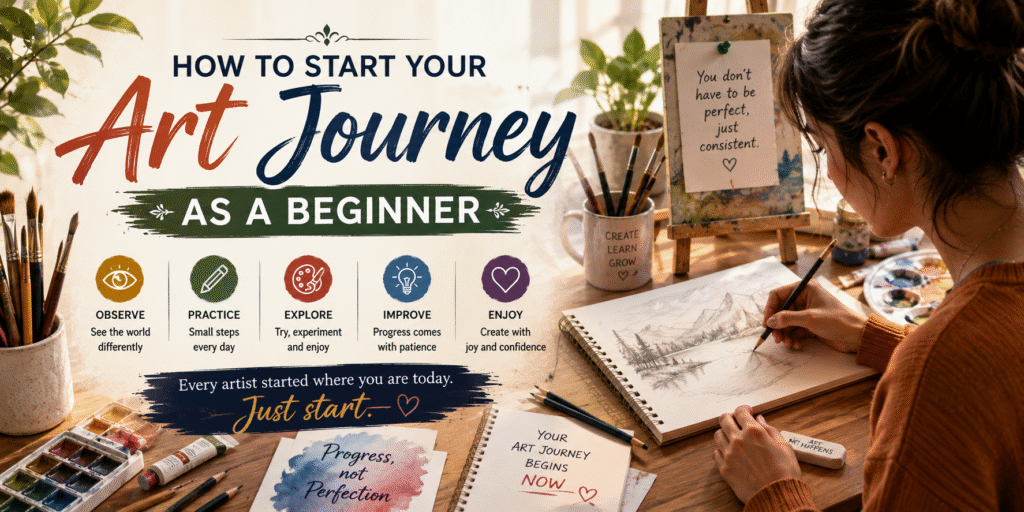
Introduction Starting your art journey can feel exciting—and a little intimidating. Many people believe they need natural talent before they can begin, but that’s one of the biggest misconceptions about learning art. The truth is simple: art is a skill developed through practice, observation, and patience. Whether you’re a child exploring creativity for the first time or an adult rediscovering a forgotten passion, every artist begins as a beginner. This guide will help you take your first steps with confidence. Why Most Beginners Feel Intimidated Many aspiring artists hesitate because they believe they need to be “good” before they even begin. Common fears include: These thoughts are completely normal—but they shouldn’t stop you from creating. Every experienced artist once faced the same uncertainties. 1. Start Before You Feel Ready The biggest obstacle isn’t a lack of talent—it’s waiting for the “perfect” moment. You don’t need: You only need the willingness to begin. Your first sketches may feel messy, but they’re the foundation of everything you’ll learn later. Remember: Progress starts with action, not perfection. 2. Learn to Observe Before You Draw Drawing isn’t just about moving a pencil. It’s about learning to notice: Strong observation skills naturally lead to stronger drawings. The more carefully you see the world, the easier it becomes to recreate it. 3. Keep Your Materials Simple Many beginners think they need expensive art supplies. In reality, you can start with: As your skills grow, you can gradually explore paints, brushes, charcoal, or other mediums. Simple tools help you focus on learning rather than collecting materials. 4. Practice Consistently Improvement comes from regular practice—not occasional bursts of motivation. Even 20–30 minutes a day can make a significant difference over time. Instead of aiming for perfect artwork, aim for consistent progress. Small improvements eventually become major milestones. 5. Accept Slow Progress Art is a journey, not a race. Some days you’ll love your work. Other days you won’t. That’s completely normal. Growth often happens in subtle ways: Trust the process and keep creating. 6. Stop Comparing Yourself to Others Comparison is one of the biggest barriers to creativity. Social media often shows finished masterpieces—but rarely the hundreds of practice sketches behind them. Instead of comparing yourself to others, compare your current work with your previous work. Your only competition is yesterday’s version of yourself. 7. Create Without Fear of Mistakes Mistakes are not signs of failure. They’re valuable learning opportunities. Children often improve quickly because they create freely without worrying about perfection. Adults tend to: Let yourself experiment. Every drawing teaches something new. 8. Learn with the Right Guidance While self-practice is valuable, structured learning helps you progress more efficiently. A good art mentor or course can help you: Learning alongside others also creates a supportive and encouraging environment. Essential Skills Every Beginner Should Develop Focus on building these foundational skills: Mastering these basics creates a strong foundation for every art style. Beginner Tips for a Successful Art Journey ✔ Draw regularly—even if it’s just for a few minutes. ✔ Carry a sketchbook wherever you go. ✔ Observe everyday objects carefully. ✔ Celebrate small improvements. ✔ Don’t erase every mistake. ✔ Try different subjects before choosing a favorite style. ✔ Keep learning and stay curious. Every Artist Was Once a Beginner No artist starts with perfect skills. Every admired painter, illustrator, and designer once struggled with uncertain lines, awkward proportions, and self-doubt. The difference is simple: They kept practicing. If you’re thinking about starting today, you’ve already taken the most important step. Conclusion Beginning your art journey isn’t about having exceptional talent—it’s about being willing to learn. With patience, regular practice, thoughtful observation, and the right guidance, anyone can develop artistic skills over time. Your first drawing won’t be your best—and it doesn’t need to be. Every sketch, every mistake, and every improvement is part of the creative journey. The hardest part is starting. Once you do, you’ll discover that every great artist began exactly where you are now—with curiosity, determination, and a blank page. Beginner’s Roadmap Stage What to Focus On Step 1 Start with simple sketches using basic materials. Step 2 Practice observation and learn to see shapes, light, and proportions. Step 3 Build a consistent daily or weekly drawing habit. Step 4 Learn core fundamentals like perspective, shading, and composition. Step 5 Experiment with different styles and mediums as your confidence grows. Step 6 Seek guidance through classes, workshops, or experienced mentors to refine your skills.
How Fine Arts Improve Focus, Creativity & Confidence
Uncategorized

How Fine Arts Improve Focus, Creativity & Confidence

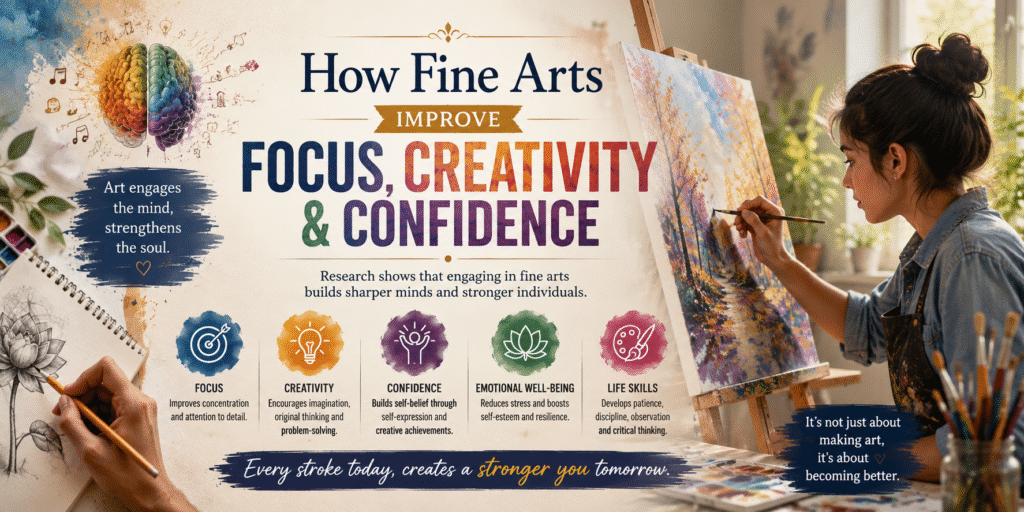
Introduction In today’s fast-paced world, distractions are everywhere. We are constantly switching between screens, notifications, and endless information, leaving little room for deep concentration or creative thinking. Fine arts offer a refreshing alternative. Whether it’s drawing, painting, or sketching, the creative process encourages us to slow down, stay present, and engage our minds with intention. Beyond creating beautiful artwork, fine arts nurture essential life skills that contribute to personal growth and well-being. Art Teaches the Power of Focus Every painting begins with a single brushstroke. Choosing colors, refining details, and completing a composition require patience and sustained attention. These seemingly simple actions strengthen our ability to concentrate and remain engaged with a task. Research in neuroscience suggests that creative activities such as drawing and painting activate areas of the brain associated with: Studies have also shown that spending just 45 minutes creating art can help reduce stress while improving concentration and mental clarity. Creativity Is a Skill That Can Be Developed Many people believe creativity is an inborn talent. In reality, research in cognitive psychology shows that creativity grows through practice, experimentation, and curiosity. Fine arts encourage learners to: Unlike subjects with fixed answers, art provides the freedom to imagine, adapt, and innovate. Building Confidence Through Creation Confidence doesn’t develop overnight—it grows through experience. Every completed sketch or painting represents a personal achievement. The process of turning an idea into something tangible creates a genuine sense of accomplishment. As artists continue creating, they begin to: This gradual shift from seeking perfection to valuing personal expression builds lasting self-confidence. Fine Arts Support Emotional Well-Being Art is more than a creative activity—it is also a powerful form of self-expression. Organizations such as the American Art Therapy Association highlight the benefits of creative expression in supporting emotional well-being and self-esteem. Regular engagement with art can help: For children and adults alike, creative expression offers a healthy outlet for emotions that are often difficult to communicate through words. Life Skills Developed Through Fine Arts The benefits of learning art extend far beyond the canvas. Fine arts help develop: These skills are valuable in academics, careers, and everyday life. Why Fine Arts Matter in Today’s World Modern life often rewards speed, efficiency, and constant productivity. Fine arts encourage something equally important: In a world filled with distractions, art teaches us to be fully present and appreciate the creative process rather than rushing toward the outcome. Art Is About the Journey, Not Just the Result One of the greatest lessons fine arts offer is that growth happens through the process itself. Each brushstroke, correction, and experiment contributes to learning. Mistakes become opportunities, and every finished artwork reflects not only creativity but also persistence and personal development. Ultimately, the value of art lies not just in the finished piece, but in the transformation that occurs while creating it. Conclusion Fine arts do much more than teach people how to draw or paint. They cultivate focus in an increasingly distracted world, encourage creativity through exploration, and build confidence through self-expression. Whether pursued as a hobby, educational activity, or lifelong passion, fine arts help shape individuals who are more attentive, imaginative, resilient, and confident. Sometimes, the greatest masterpiece isn’t the artwork itself—it’s the person who grows through the creative journey. Why Learn Fine Arts? Benefit How Fine Arts Help Focus Improves attention, concentration, and patience through mindful creative practice. Creativity Encourages imagination, experimentation, and innovative thinking. Confidence Builds self-belief through personal expression and artistic achievement. Emotional Well-being Reduces stress and promotes relaxation through creative engagement. Life Skills Develops observation, problem-solving, resilience, and independent thinking.

Growing Art Culture in Chennai — Why Now Is the Right Time to Learn Art
Uncategorized

Growing Art Culture in Chennai — Why Now Is the Right Time to Learn Art

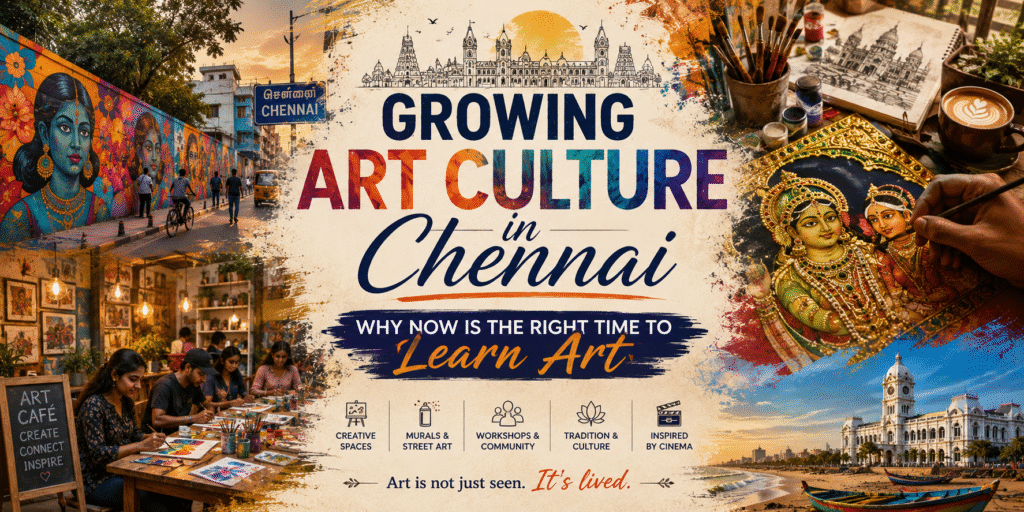
Introduction Art in Chennai is experiencing a remarkable transformation. Once associated mainly with galleries and formal classrooms, it has now become part of everyday life. From colorful street murals and creative cafés to cultural festivals and digital platforms, art is becoming more visible, accessible, and engaging than ever before. Whether you’re a beginner or someone looking to reconnect with your creative side, there has never been a better time to start learning art. Chennai’s Creative Scene Is Flourishing The city’s artistic landscape has expanded beyond traditional spaces. Today, you can discover creativity through: These spaces are making art more approachable and encouraging people from all backgrounds to participate. Art Is Becoming More Accessible One of the biggest changes in Chennai’s art culture is accessibility. Learning art is no longer reserved for professional artists or students pursuing formal education. Anyone with curiosity and a willingness to explore can begin their creative journey. Today, aspiring artists can join: The focus has shifted from perfection to self-expression and learning through experience. The Rise of Creative Communities Art is increasingly becoming a shared experience. Creative communities across Chennai are bringing together: These communities encourage collaboration, inspiration, and continuous learning while helping artists connect with like-minded individuals. How Cinema and Digital Media Are Influencing Art South Indian cinema has become increasingly visual and artistic in recent years. From carefully designed sets and costumes to striking color palettes and thoughtful cinematography, films are inspiring audiences to appreciate aesthetics in everyday life. At the same time, platforms like Instagram, Pinterest, and YouTube have made discovering artists, techniques, and creative ideas easier than ever. This constant exposure is encouraging more people to explore artistic expression. A New Appreciation for Traditional Art Alongside contemporary creativity, Chennai is witnessing renewed interest in traditional Indian art forms. Many people are rediscovering: Rather than viewing these traditions as relics of the past, younger generations are embracing them as meaningful cultural expressions that connect heritage with modern creativity. Why This Is the Best Time to Learn Art Several factors make this an ideal moment to begin your artistic journey: More Learning Opportunities Growing Creative Culture Personal Growth Learning art helps develop: Art Is More Than a Skill Art is no longer simply about creating beautiful paintings. It has become a way to: Whether pursued as a hobby, a profession, or a personal passion, art offers lifelong value. Chennai’s Artistic Future With increasing support for artists, expanding creative spaces, and growing public appreciation, Chennai is steadily emerging as one of South India’s vibrant cultural hubs. The city continues to celebrate both contemporary innovation and traditional craftsmanship, creating opportunities for artists of every generation to learn, collaborate, and grow. Conclusion The growing art culture in Chennai reflects more than a passing trend—it represents a shift in how people engage with creativity, culture, and community. Murals brighten city streets, creative cafés foster collaboration, films inspire visual appreciation, and traditional art forms are finding new audiences. If you’ve ever wanted to learn art, this is the perfect time to begin. The opportunities are abundant, the community is welcoming, and the city’s creative energy makes every step of the journey more inspiring. In Chennai today, art isn’t just something to admire—it’s something to experience, create, and live.

The History & Beauty of Tanjore Painting and Kerala Mural Art
Uncategorized

The History & Beauty of Tanjore Painting and Kerala Mural Art

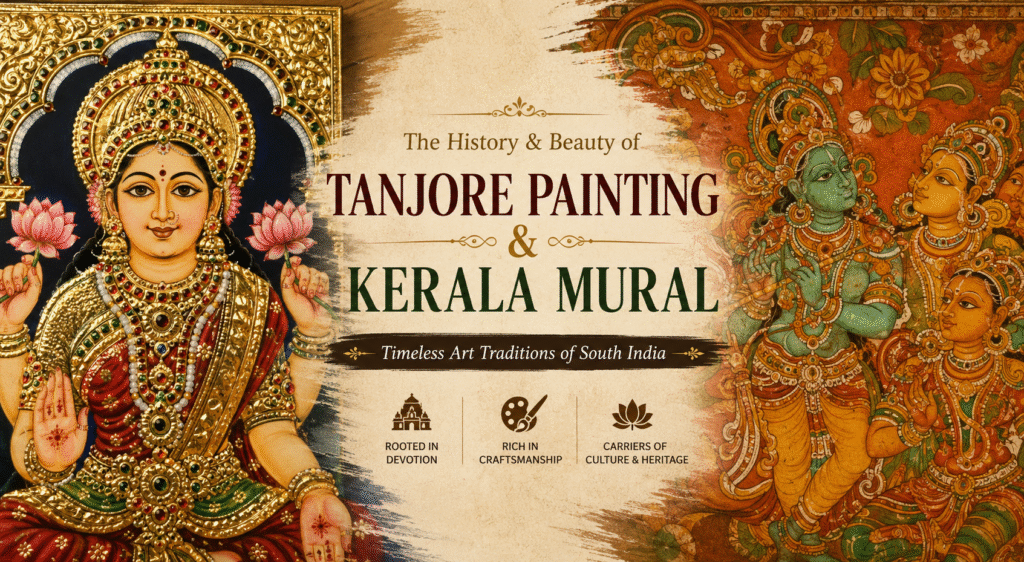
Introduction In South India, art has always been more than decoration. It serves as a medium of devotion, storytelling, and cultural identity. Among the region’s most celebrated artistic traditions, Tanjore painting and Kerala mural painting stand out for their unique styles, craftsmanship, and spiritual significance. Although both traditions are deeply rooted in faith, they express the divine in remarkably different ways. One celebrates radiant icons of worship, while the other unfolds epic stories across architectural spaces. The Origins of Tanjore Painting The tradition of Tanjore painting originated in the temple town of Thanjavur, Tamil Nadu, during the 16th century. It flourished under the patronage of the Nayaka Dynasty and later the Maratha rulers of Thanjavur. Originally created for temples and household shrines, these paintings were designed to inspire devotion. Artists portrayed deities such as: Rather than depicting scenes, the focus remained on a single divine figure presented with grandeur and serenity. The Beauty of Tanjore Paintings One of the defining characteristics of Tanjore painting is its luxurious craftsmanship. Key Features The combination of raised textures and shimmering gold creates an iconic glow that symbolizes: The centered composition naturally guides the viewer toward the deity, creating an atmosphere of peace and reverence. The Origins of Kerala Mural Painting Kerala mural painting dates back even earlier, between the 9th and 12th centuries. These magnificent artworks were painted directly on temple walls throughout Kerala. Following artistic principles described in ancient texts such as the Shilpa Shastras, artists transformed temple interiors into immersive storytelling spaces. Instead of portraying a single deity, Kerala murals depict elaborate narratives inspired by: The Beauty of Kerala Murals Kerala mural painting is celebrated for its harmony, storytelling, and natural elegance. Traditional Materials Artists prepared pigments using natural ingredients such as: Traditional Colour Palette The figures feature: Every mural reflects patience, discipline, symbolism, and artistic precision. Tanjore Painting vs Kerala Mural Painting Feature Tanjore Painting Kerala Mural Painting Origin Thanjavur, Tamil Nadu Kerala Temples Period 16th Century 9th–12th Century Surface Wooden panels Lime-plastered walls Main Theme Single deity Mythological stories Style Iconic and devotional Narrative and expressive Materials Gold foil, stones, relief work Natural pigments Visual Effect Rich, radiant, luxurious Earthy, elegant, dynamic Purpose Worship and home shrines Temple storytelling Spiritual Significance Although visually different, both art forms share a common purpose: Tanjore paintings invite personal worship through a focused image of the divine. Kerala murals immerse viewers in sacred stories that unfold across architectural spaces. Evolution Through Time As royal and temple patronage declined, both traditions adapted to changing times. Tanjore Painting Today Modern artists continue the tradition by: Kerala Murals Today After experiencing a period of decline, Kerala mural painting was revived through institutions such as Kerala Kalamandalam. Today, these artworks are recreated on: This has made the art form more accessible while preserving its traditional techniques. Why These Art Forms Still Matter In today’s fast-paced digital world, Tanjore paintings and Kerala murals remind us of the value of slow craftsmanship. Every brushstroke reflects: Their enduring beauty lies not only in their techniques—whether it is the radiant gold of Tanjore paintings or the natural elegance of Kerala murals—but also in their ability to preserve centuries of culture, devotion, and artistic excellence. These traditions continue to bridge the human and the divine, connecting generations through stories, faith, and timeless craftsmanship. Conclusion Tanjore painting and Kerala mural painting are two extraordinary treasures of South Indian art. While one captivates through its luminous icons and intricate embellishments, the other enchants through expansive storytelling and harmonious compositions. Despite evolving over centuries, both traditions remain powerful expressions of India’s artistic heritage, reminding us that true art is not merely seen—it is experienced, remembered, and revered.

Scroll to Top